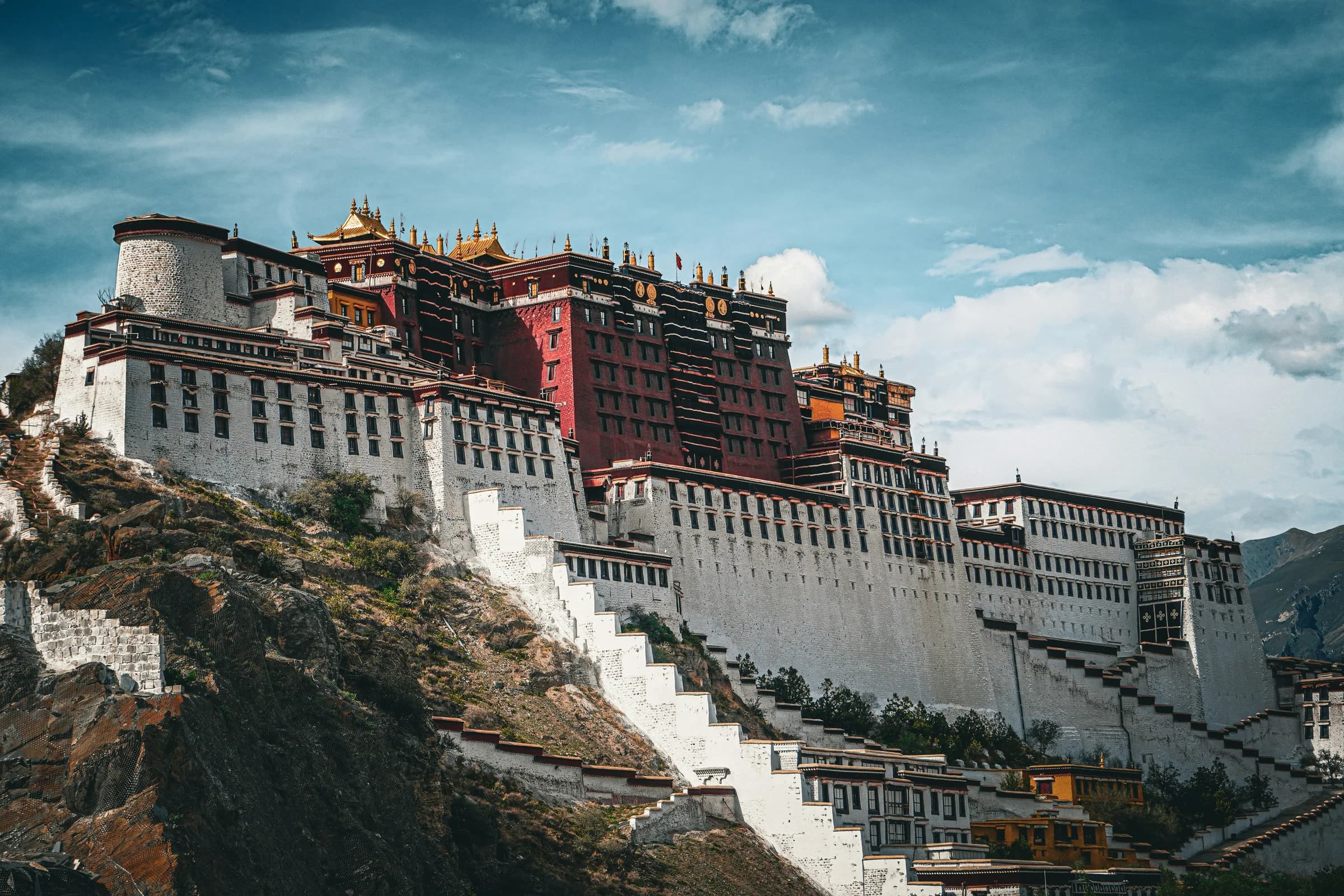
Overview
Tibet, perched on the highest plateau on Earth, offers a profound journey through ancient Buddhist culture and breathtaking landscapes. From the magnificent Potala Palace in Lhasa to the sacred Mount Kailash, Tibet's spiritual heritage runs deep. The region's otherworldly scenery — turquoise lakes, vast grasslands, and snow-capped peaks — combined with warm Tibetan hospitality creates an unforgettable experience.
Best Time to Visit
- Spring
- Warming up, occasional dust storms
- Summer
- Peak season, some rain
- Autumn
- Clear and dry, excellent visibility
- Winter
- Very cold, some areas inaccessible
Highlights
Potala Palace
Former winter residence of the Dalai Lama, iconic symbol of Tibet
Jokhang Temple
Tibet's most sacred temple and pilgrimage destination
Mount Everest North Base Camp
The Tibetan side of the world's highest peak
Mount Kailash
Sacred to four religions, a profound pilgrimage circuit
Namtso Lake
One of the highest saltwater lakes in the world
Shigatse & Tashilhunpo
Second largest city and seat of the Panchen Lama
Explore Tibet
Discover the distinct regions and experiences that make Tibet extraordinary.
Getting There
Most visitors fly to Lhasa Gonggar Airport from mainland China cities (Beijing, Chengdu, Xian). The Qinghai-Tibet Railway is a scenic alternative. All foreign tourists must have a Tibet Travel Permit.
Getting Around
Private 4x4 vehicles with driver and guide are mandatory for foreign tourists. The guide will handle all permit checkpoints throughout your journey.
Cultural Tips
Respect religious customs
Tibet is deeply Buddhist; show reverence at sacred sites
Walk clockwise around religious sites
Follow the sun's path as per Buddhist tradition
Be sensitive with photography
Avoid photos of military installations; ask permission at monasteries
Accept offered tea graciously
Butter tea is customary; try a small amount even if unusual
Be politically sensitive
Avoid discussions about sensitive political topics
Packing List
General
- ●Very warm layers
- ●Down jacket
- ●Sunglasses (UV protection)
- ●SPF 50+ sunscreen
- ●Lip balm
- ●Hand cream
- ●Water bottle
Altitude
- ●Altitude sickness medication (Diamox)
- ●Electrolytes
- ●Snacks
- ●Headache medication
Health & Safety
Altitude is a serious concern — Lhasa is at 3,650m. Spend at least 2-3 days acclimatizing before any strenuous activity. Drink lots of water and ascend gradually. Medical facilities are limited.
Money Matters
Chinese Yuan (CNY/RMB) is the currency. ATMs available in Lhasa; carry cash for remote areas. All tour costs must be pre-arranged through your tour operator.
Emergency Information
- Tibet Autonomous Region People's Hospital (Lhasa)
Plan Your Tibet Journey
Our AI Expedition Architect will craft a bespoke luxury itinerary tailored to your dates, interests, and travel style.
Start Planning