
Paro Valley
Bhutan
The Paro Valley is Bhutan's most iconic destination and the first impression most visitors receive of the Thunder Dragon Kingdom. As the only international airport in the country, Paro delivers a dramatic arrival — aircraft thread through narrow mountain valleys before touching down on a runway flanked by rice paddies and ancient watchtowers. From this first moment, Paro announces itself as a place where natural beauty and cultural heritage exist in perfect harmony.
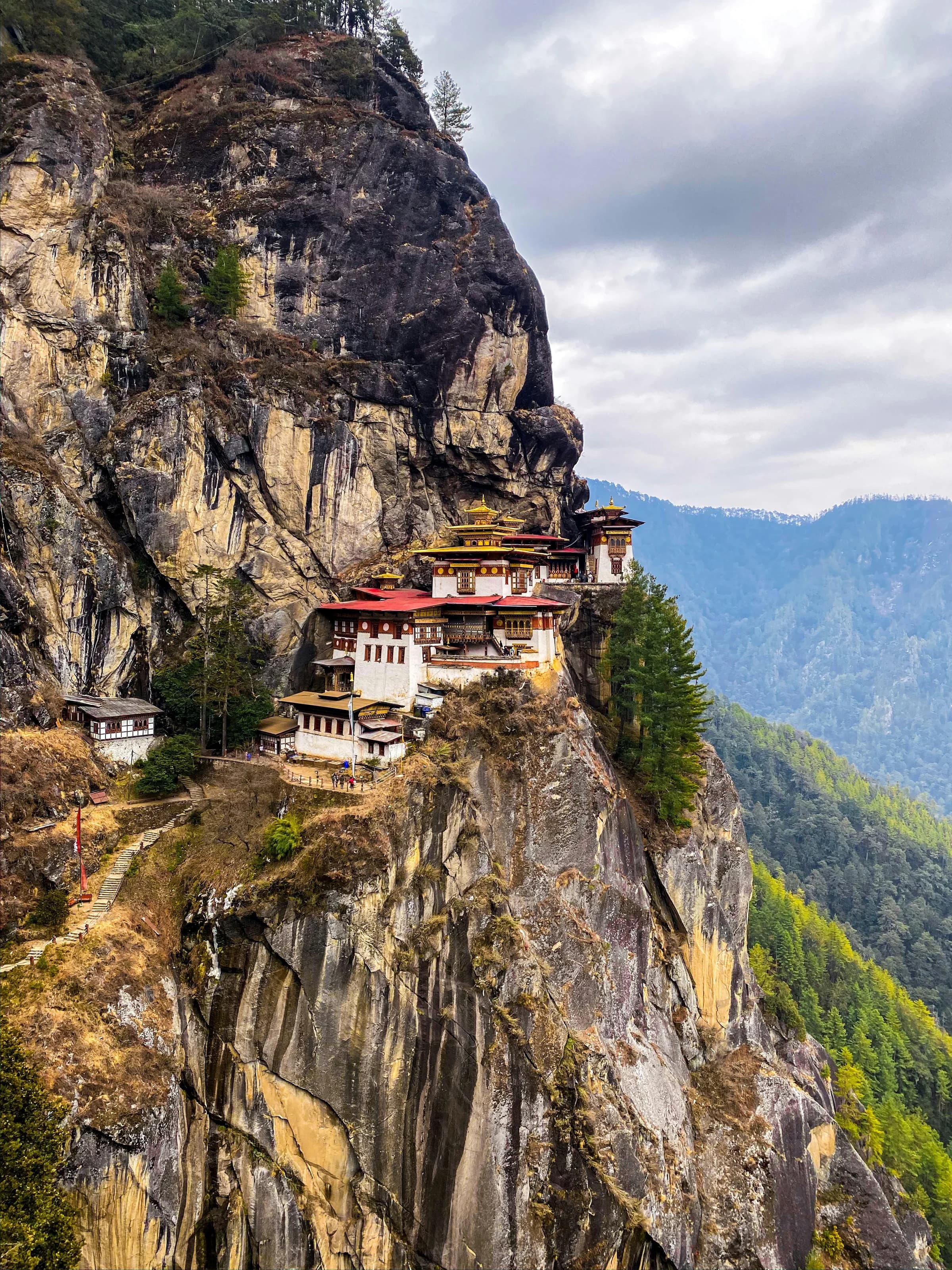
The valley's centrepiece is Taktsang Monastery — the Tiger's Nest — arguably the most photographed and spiritually significant site in all of Bhutan. Clinging impossibly to a sheer cliff face 900 meters above the valley floor, Taktsang is said to be the meditation site of Guru Rinpoche, who flew to the cliff on the back of a tigress in the 8th century. The hike to the monastery is Bhutan's essential experience, winding through blue pine forests decorated with prayer flags before arriving at a complex of temples that seems to defy gravity.
Paro Dzong (Rinpung Dzong), the massive fortress-monastery that dominates the valley, is one of Bhutan's finest examples of traditional architecture. Its towering whitewashed walls, intricate woodwork, and active monastic community offer insight into Bhutan's unique fusion of governance and religion. The traditional cantilever bridge that leads to the dzong is one of the most photographed structures in the country.
The valley's hotels rank among Asia's finest. Our house here is the newly opened Taj Paro Resort & Spa, with Amankora Paro available throughout for guests who choose the upgrade tier — both combining contemporary comfort with traditional Bhutanese architecture, spa treatments, private dining, and cultural programming that reveals the valley's deeper dimensions. Hot stone baths — a uniquely Bhutanese wellness tradition — use river stones heated over fire and placed in wooden tubs to create a deeply relaxing experience.
Beyond the main attractions, the Paro Valley rewards exploration. The ruins of Drukgyel Dzong, destroyed by fire in 1951, offer views of Mount Chomolhari. The National Museum, housed in an ancient watchtower, contains a collection of textiles, thangkas, and artefacts that illuminate Bhutanese history. Rural farmhouses dot the rice paddies, and homestay experiences provide intimate encounters with Bhutanese family life.
Paro is the gateway to Bhutan, but it is far more than a transit point. Two to three days in the valley allow travelers to absorb its unique combination of dramatic scenery, living Buddhist culture, and world-class hospitality.
Best Time to Visit
March–May for spring blooms and clear skies; September–November for autumn festivals and harvest season
Region
Paro Valley, Bhutan
Highlights
Tiger's Nest Monastery
Hike to the iconic Taktsang Monastery clinging to a cliff 900m above the valley
Paro Dzong
Explore the magnificent Rinpung Dzong fortress-monastery with its ornate woodwork
Hot Stone Baths
Experience Bhutan's unique wellness tradition using river stones heated over fire
Drukgyel Dzong
Visit the dramatic ruins with views of sacred Mount Chomolhari (7,326m)
Rice Paddy Walks
Stroll through the valley's emerald rice terraces and traditional farmhouses
Archery Matches
Watch or participate in Bhutan's national sport at local archery grounds
Journeys That Visit Paro Valley
Luxury Accommodations
Taj Paro Resort & Spa
Newly opened in 2026, and our house in the Paro valley on The Paro Tshechu, The Western Kingdom and The Himalayan Arc — the base for Taktsang, Kyichu Lhakhang and the festival courtyard of Rinpung Dzong.
Amankora Paro
Aman's lodge in a blue pine forest above the valley. Available throughout as the upgrade tier on The Western Kingdom — every night of the journey in one house, with the lodge's own guiding.
Six Senses Paro
Six Senses' lodge in the Paro valley. Offered, like Amankora, as the throughout upgrade tier on The Western Kingdom.
Related Destinations
Plan Your Paro Valley Journey
Our AI Expedition Architect will craft a bespoke luxury itinerary tailored to your dates, interests, and travel style.