
Thimphu
Bhutan
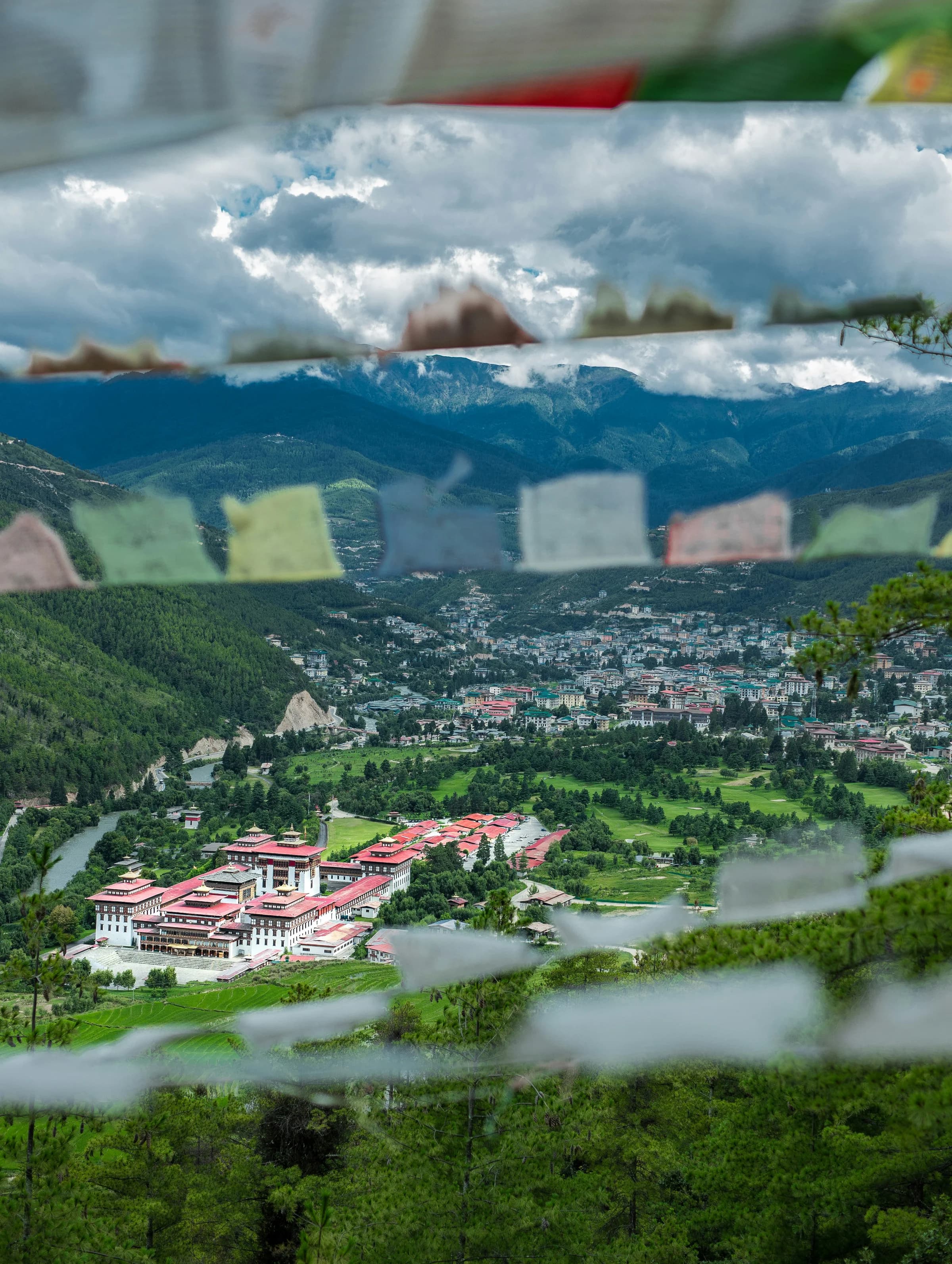
Thimphu holds the distinction of being the world's only capital city without a single traffic light — a fact that perfectly encapsulates Bhutan's determination to modernise on its own terms. Nestled in a valley at 2,320m, Bhutan's capital is a fascinating blend of ancient traditions and contemporary culture, where monks in crimson robes share the streets with young entrepreneurs, and medieval fortress-monasteries overlook a growing cityscape of painted wooden buildings.
The city's spiritual heart is Tashichho Dzong, the imposing fortress-monastery that serves as both the seat of government and the summer residence of the central monastic body. Its immaculate whitewashed walls, golden roofs, and elaborate courtyard host some of Bhutan's most important ceremonies. During the annual Thimphu Tshechu, the dzong comes alive with costumed dancers performing sacred rituals that date back centuries.
Above the city, the massive Buddha Dordenma statue — one of the largest in the world at 51 meters — sits in serene meditation overlooking the valley. The bronze and gold figure contains 125,000 smaller Buddha statues and offers panoramic views of Thimphu from its hilltop perch. It is both a pilgrimage site and a remarkable feat of devotional engineering.
Thimphu's cultural offerings are remarkably rich for a city of its size. The Institute of Zorig Chusum (School of Thirteen Arts) teaches traditional Bhutanese arts from painting to woodcarving. The National Textile Museum showcases the kingdom's extraordinary weaving heritage, with some textiles taking over a year to complete. Weekend markets along the Wang River offer local produce, handcrafts, and street food that provides a genuine taste of Bhutanese daily life.
The city's emerging dining scene surprises visitors with its sophistication. Restaurants serving contemporary Bhutanese cuisine alongside international fare have elevated Thimphu beyond its modest reputation. The national dish, ema datshi (chillies in cheese sauce), reaches its finest expression in the capital's better restaurants.
For nature lovers, Thimphu offers the Motithang Takin Preserve, home to Bhutan's national animal — the takin, a peculiar goat-antelope found nowhere else. Hiking trails in the surrounding hills provide exercise with mountain views, and the short drive to Dochula Pass reveals one of Bhutan's most spectacular panoramas.
Best Time to Visit
September–November for the Thimphu Tshechu and autumn clarity; March–May for mild weather and spring blooms
Region
Thimphu, Bhutan
Highlights
Tashichho Dzong
Visit the grand fortress-monastery that serves as Bhutan's seat of government
Buddha Dordenma
Stand before one of the world's largest Buddha statues with panoramic valley views
Thirteen Arts School
Watch artisans practising Bhutan's traditional arts of painting, weaving, and carving
Weekend Market
Browse local produce, handcrafts, and textiles at the vibrant riverside market
Thimphu Tshechu
Experience the capital's annual religious festival with masked dances and ceremonies
Dochula Pass
Short drive to 108 memorial chortens with sweeping Himalayan panoramas
Journeys That Visit Thimphu
Luxury Accommodations
Pemako Thimphu
A quiet retreat on the forested edge of the capital, and our house in Thimphu on The Paro Tshechu, The Western Kingdom and The Himalayan Arc.
Amankora Thimphu
Aman's intimate forest lodge with suites surrounded by blue pines above the city. Available throughout as the upgrade tier on The Western Kingdom.
Six Senses Thimphu
Six Senses' lodge above the capital. Offered, like Amankora, as the throughout upgrade tier on The Western Kingdom.
Related Destinations
Plan Your Thimphu Journey
Our AI Expedition Architect will craft a bespoke luxury itinerary tailored to your dates, interests, and travel style.