Lhasa
Tibet
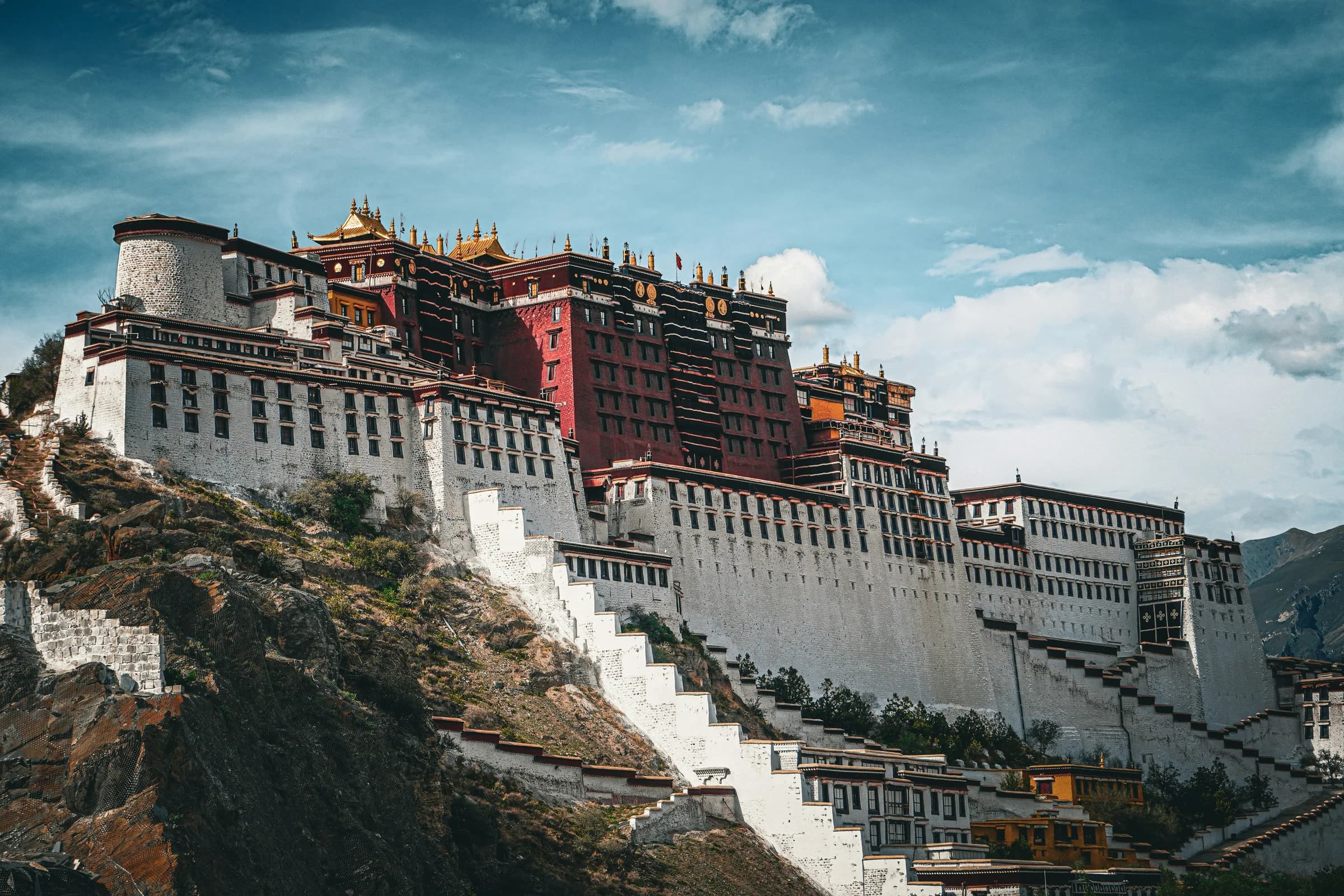
Lhasa, the "Place of the Gods," is one of the world's most spiritually charged cities. At 3,650m on the Tibetan Plateau, the ancient capital of Tibet has been the heart of Tibetan Buddhist civilisation for over 1,300 years. Despite the profound changes of the past century, Lhasa retains an atmosphere of deep devotion — pilgrims prostrate along the Barkhor circuit, monks debate in monastery courtyards, and the Potala Palace rises above the city like a white-and-red cliff face of devotional architecture.
The Potala Palace, former winter residence of the Dalai Lama, is arguably the most impressive religious building on Earth. Rising thirteen stories from its rocky promontory, its 1,000 rooms contain chapels, throne rooms, and the gilded stupas of previous Dalai Lamas. The interior is a treasure house of Tibetan art — murals, thangkas, and sculptures spanning centuries of unbroken creative tradition. The palace's sheer scale and the devotion required to build it at this altitude inspire a sense of awe that transcends cultural boundaries.
The Jokhang Temple, Tibet's holiest site, sits at the heart of the old city. Founded in the 7th century to house a sacred statue of Buddha Shakyamuni brought from China, the temple is the destination for pilgrims from across the Tibetan world. The Barkhor, the ancient pilgrimage circuit surrounding the temple, is a living stream of devotion — a kilometre-long path where pilgrims, monks, and travellers orbit the sacred precinct alongside vendors selling prayer beads, incense, and religious artefacts.
Sera and Drepung monasteries, on the outskirts of Lhasa, were once among the largest in the world. Sera's famous debating courtyard — where monks engage in a dramatic, hand-clapping style of philosophical debate — provides one of Tibet's most dynamic cultural experiences. Drepung, which once housed over 10,000 monks, offers a quieter contemplative atmosphere with remarkable views over the Lhasa Valley.
Modern Lhasa offers comfortable luxury accommodation that makes the high-altitude experience manageable. Five-star hotels provide oxygen-enriched rooms, spa treatments using traditional Tibetan medicine, and restaurants serving both Tibetan and international cuisine. These properties serve as essential bases for acclimatisation — the first two days in Lhasa should be spent gently, allowing the body to adjust before venturing further into Tibet.
Lhasa is typically the starting point for journeys deeper into Tibet — to Everest North Base Camp, Mount Kailash, or the sacred lake of Namtso. But the city itself warrants three to four days of exploration, allowing time to absorb its spiritual intensity at a pace that respects both the altitude and the depth of what Lhasa has to offer.
Best Time to Visit
April–June and September–October for mild weather, clear skies, and comfortable acclimatisation conditions
Region
Lhasa, Tibet
Highlights
Potala Palace
Explore the towering 13-storey former residence of the Dalai Lama with 1,000 rooms
Jokhang Temple
Visit Tibet's holiest temple, the spiritual heart of Tibetan Buddhism for over 1,300 years
Barkhor Circuit
Walk the ancient pilgrimage route circling the Jokhang amid monks, pilgrims, and vendors
Sera Monastery Debates
Watch monks engage in dramatic philosophical debates with hand-clapping and shouting
Drepung Monastery
Explore one of Tibet's largest monasteries with remarkable Lhasa Valley views
Tibetan Cuisine
Experience authentic Tibetan dishes — momos, thukpa, and butter tea — in atmospheric restaurants
Luxury Accommodations
St. Regis Lhasa Resort
Ultra-luxury resort with oxygen-enriched rooms, Iridium Spa, and Potala Palace views
$400–800/nightShangri-La Lhasa
Five-star comfort with traditional Tibetan decor, heated floors, and altitude support
$300–550/nightIntercontinental Lhasa Paradise
Premium resort with spacious grounds, multiple dining options, and a full spa
$250–450/nightRelated Destinations
Plan Your Lhasa Journey
Our AI Expedition Architect will craft a bespoke luxury itinerary tailored to your dates, interests, and travel style.