
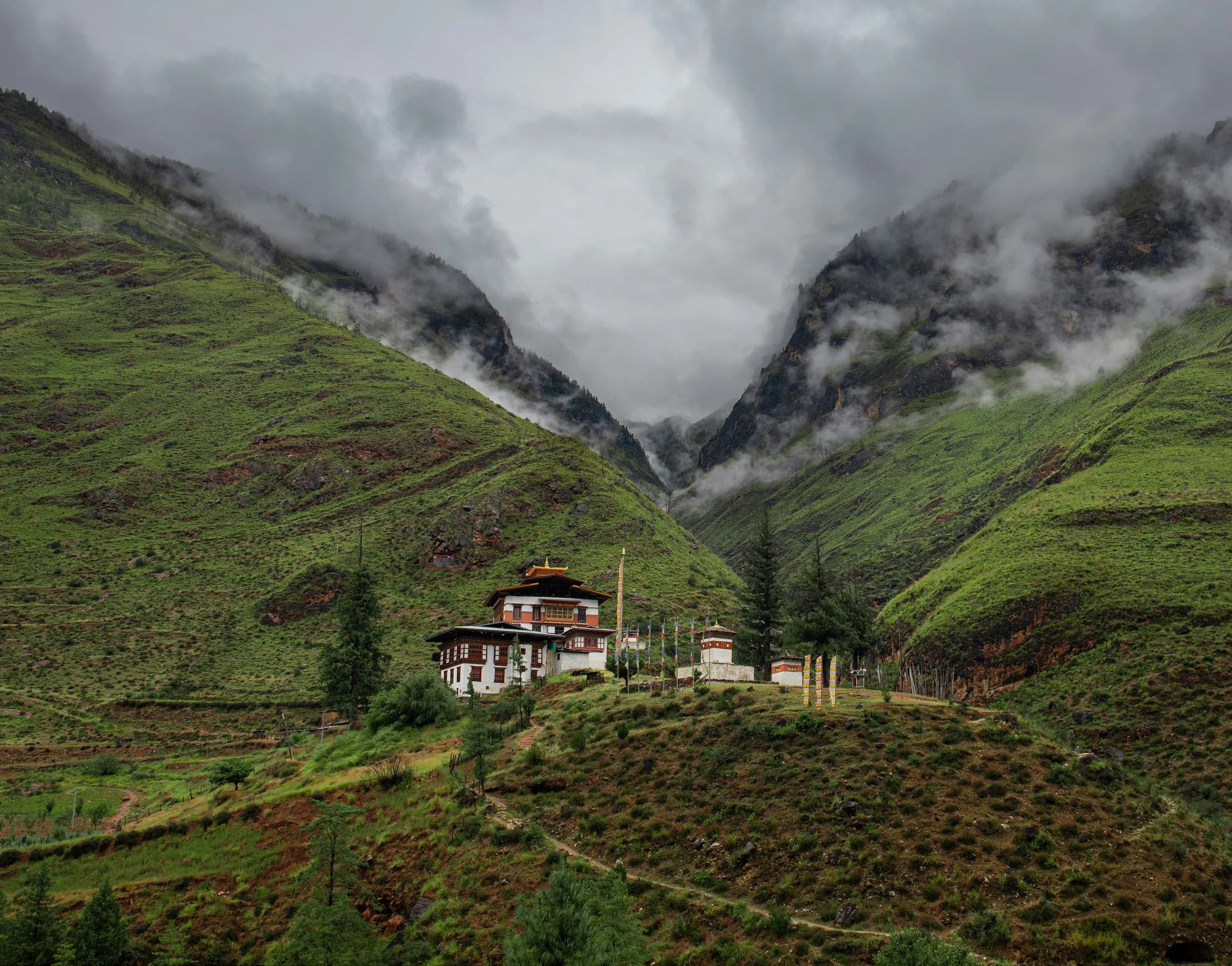
Punakha
Bhutan
Punakha, Bhutan's ancient winter capital, occupies one of the most beautiful settings in the Himalayas. Located at the confluence of the Mo Chhu (Mother River) and Pho Chhu (Father River) at a relatively low elevation of 1,200m, Punakha enjoys a mild subtropical climate that makes it Bhutan's most fertile valley. Terraced rice paddies glow emerald green in summer and golden at harvest, framed by forested mountains that rise steeply on all sides.
The Punakha Dzong is widely regarded as the most beautiful building in Bhutan — and one of the most beautiful in all of Asia. Completed in 1638 by Zhabdrung Ngawang Namgyal, the dzong sits majestically at the junction of the two rivers, its whitewashed walls, ornate woodwork, and soaring utse (central tower) creating a scene of extraordinary grace. The dzong serves as the winter residence of Bhutan's central monastic body, and its interior contains some of the kingdom's finest examples of Buddhist art.
The valley's spiritual significance extends beyond the dzong. Chimi Lhakhang, the "Temple of the Divine Madman," perched on a hill amid rice paddies, is one of Bhutan's most beloved pilgrimage sites. Dedicated to Drukpa Kunley, the unconventional 15th-century saint known for his outrageous behavior and earthy wisdom, the temple draws couples seeking fertility blessings and visitors charmed by the story of Bhutan's most colorful religious figure.
Punakha's natural environment is markedly different from the rest of Bhutan. The warm, humid climate supports tropical vegetation including bougainvillea, jacaranda, and banana palms that lend the valley an almost Mediterranean feel. In winter, the critically endangered black-necked cranes migrate to the Phobjikha Valley nearby — a spectacle celebrated with the annual Black-Necked Crane Festival.
Journey seekers are rewarded with white-water rafting on the Mo Chhu and Pho Chhu rivers, which offer class II-IV rapids depending on the season. Hiking trails through the valley lead to remote monasteries and villages that see few tourists, providing authentic encounters with rural Bhutanese life.
Luxury lodges in the Punakha Valley offer some of Bhutan's most refined accommodations. Properties overlooking the rice paddies or perched above the river valley provide a tranquil base from which to explore this enchanting region. A two-to-three-day stay allows visitors to fully appreciate Punakha's unique combination of architectural beauty, spiritual heritage, and natural splendour.
Best Time to Visit
October–December for harvest season and crane migration; March–May for spring blooms and warm weather
Region
Punakha, Bhutan
Highlights
Punakha Dzong
Visit Bhutan's most beautiful dzong at the confluence of two rivers
Chimi Lhakhang
Walk through rice paddies to the charming Temple of the Divine Madman
River Rafting
White-water rafting on the Mo Chhu and Pho Chhu rivers through pristine valleys
Rice Valley Walks
Stroll through fertile terraces with subtropical vegetation and mountain views
Khamsum Yulley Namgyal Chorten
Hike to this ornate hilltop temple with panoramic views of the Punakha Valley
Black-Necked Cranes
Spot the endangered cranes in nearby Phobjikha Valley (November–March)
Luxury Accommodations
COMO Uma Punakha
Riverside luxury with contemporary suites, COMO Shambhala spa, and valley views. Our house in the Punakha valley — two nights on every Bhutan journey.
Amankora Punakha
Aman's intimate farmhouse-style lodge set amid rice paddies and citrus orchards. Available throughout as the upgrade tier on The Western Kingdom.
Six Senses Punakha
Six Senses' lodge in the Punakha valley. Offered, like Amankora, as the throughout upgrade tier on The Western Kingdom.
Related Destinations
Plan Your Punakha Journey
Our AI Expedition Architect will craft a bespoke luxury itinerary tailored to your dates, interests, and travel style.