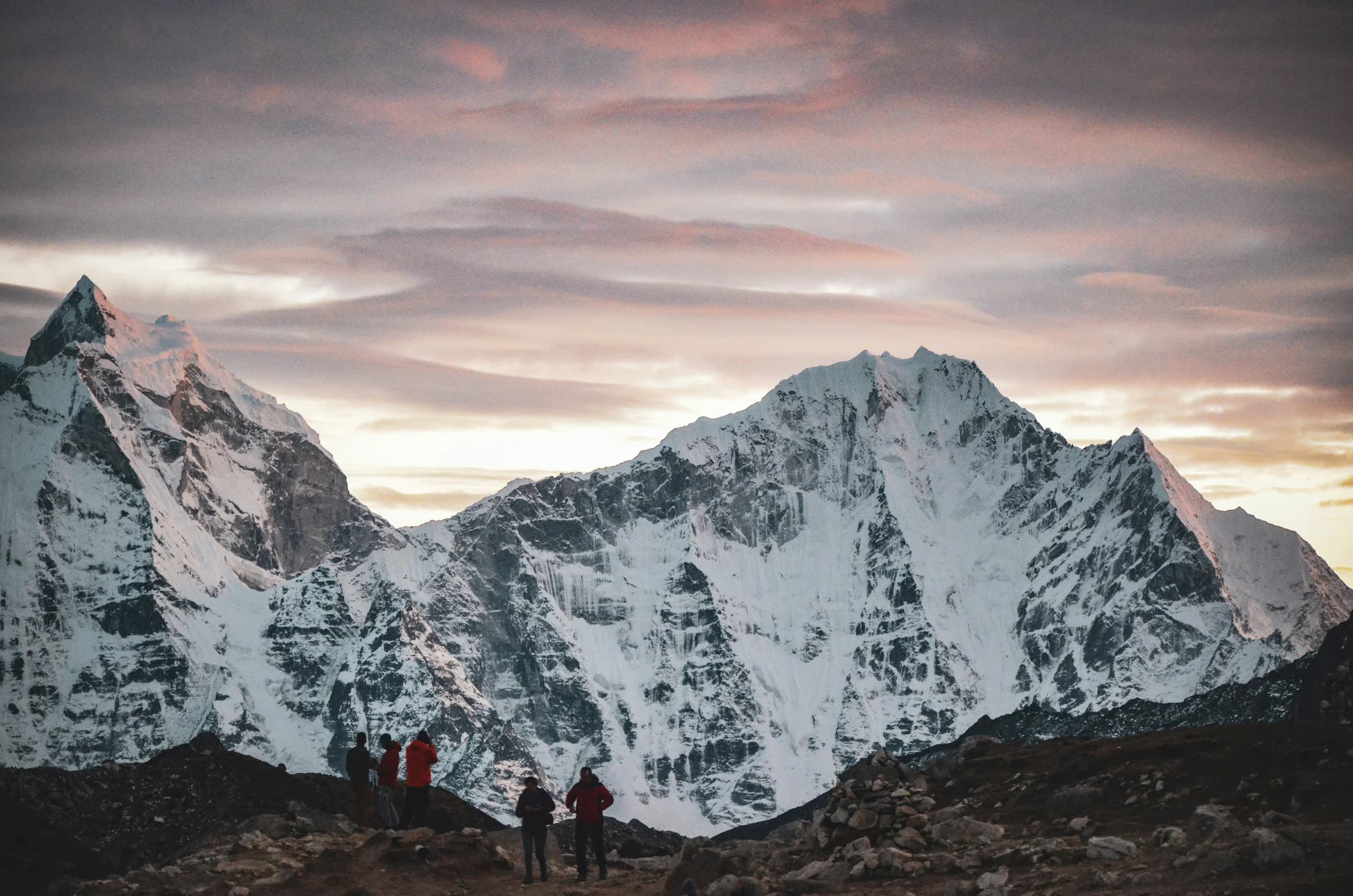
Everest Summit Expedition
Overview
The ultimate mountaineering achievement — a full-service luxury Everest summit expedition via the South Col route from Nepal. This 65-day expedition provides premium Base Camp facilities, 1:1 summit Sherpa ratio, veteran Western expedition leader, supplemental oxygen, and comprehensive high-camp support. From Dwarika's Hotel in Kathmandu to the summit of the world's highest peak at 8,849m, every detail is managed to give you the best possible chance of standing on the roof of the world.
Route
Kathmandu → Lukla → Namche Bazaar → Tengboche → Dingboche → Lobuche → Gorak Shep → Everest Base Camp → Camp 1 (6,065m) → Camp 2 (6,500m) → Camp 3 (7,200m) → Camp 4 South Col (7,950m) → Summit (8,849m) → return
Highlights
- Summit Mount Everest (8,849m) — the highest point on Earth
- 1:1 summit Sherpa with extensive 8,000m+ experience for each climber
- Premium Base Camp with individual sleeping tents, heated dining dome, hot showers, and WiFi
- Veteran Western expedition leader with multiple Everest summits
- Full medical support with expedition doctor and Gamow bag at Base Camp
- 4 bottles supplemental oxygen per climber with high-flow regulator
Quick Facts
- Duration
- 65 Days / 64 Nights
- Difficulty
- Extreme
- Group Size
- 1-8 guests
- Max Altitude
- 8,849m
- Best Months
- April-May
- Starting From
- $55,000 pp
Day-by-Day Itinerary
Arrival in Kathmandu
Private airport transfer to Dwarika's Hotel. Welcome meeting with expedition leader. Gear check and equipment briefing. Welcome dinner at Krishnarpan restaurant.
Expedition Briefing & Permits
Morning expedition briefing covering the full 65-day plan. Final gear check and equipment distribution. Permit processing at Nepal Mountaineering Association. Visit Boudhanath Stupa for a traditional blessing ceremony. Afternoon free for last-minute shopping.
Final Preparation Day
Final equipment sorting and packing. Duffel bags prepared for porter/yak transport. Medical check with expedition doctor. Afternoon at leisure. Pre-expedition team dinner and route presentation by expedition leader.
Fly to Lukla, Trek to Phakding
Scenic morning flight to Lukla (2,840m). Begin trek through pine forests along the Dudh Kosi river to Phakding.
Trek to Namche Bazaar
Cross suspension bridges over the Dudh Kosi. Steep ascent through forests to the Sherpa capital of Namche Bazaar with first views of Everest.
Acclimatization in Namche
Essential acclimatization day. Hike to Everest View Hotel (3,880m) for panoramic views. Visit Sherpa Culture Museum and local market. Afternoon rest.
Trek to Tengboche
Descend to Phunki Tenga and climb through rhododendron forest to Tengboche monastery, the spiritual heart of the Khumbu.
Trek to Dingboche
Continue past Pangboche into the broader Imja Khola valley. Views of Ama Dablam, Island Peak, and Lhotse dominate the skyline.
Acclimatization in Dingboche
Acclimatization hike to Nangkartshang Peak (5,083m) for stunning views of Makalu, Lhotse, and the Imja valley.
Trek to Lobuche
Trek through the memorial chortens at Thukla Pass to Lobuche, passing the Khumbu Glacier lateral moraine.
Trek to Gorak Shep & Visit EBC
Trek to Gorak Shep (5,164m). After lunch, hike to Everest Base Camp to preview the expedition camp site. Return to Gorak Shep.
Move to Everest Base Camp
Move to the expedition's premium Base Camp. Settle into individual sleeping tents. Camp orientation, meet the full Sherpa team, and first meal in the heated dining dome.
Base Camp Setup & Rest
Rest day at Base Camp for acclimatization. Camp facilities orientation: dining dome, communication tent, shower tent, solar charging. Meet the expedition cook and doctor.
Puja Ceremony
Traditional Buddhist puja ceremony conducted by a lama from Pangboche monastery. Blessing of climbing equipment, prayer flags, and offerings. An essential spiritual ritual before any Everest attempt. Team bonding afternoon.
Icefall Training
Practice ladder crossing, jumar technique, and crevasse rescue skills near Base Camp. Review safety protocols for the Khumbu Icefall. Afternoon weather briefing.
Khumbu Icefall Reconnaissance
Short hike into the lower section of the Khumbu Icefall to familiarize with the route. Return to Base Camp by midday. Rest and hydrate.
Rest Day at Base Camp
Complete rest day. Receive route report from the Icefall doctors. Light walks around camp. Team strategy meeting for Rotation 1.
Preparation for Rotation 1
Final preparation for first rotation. Gear sorting and packing for Camp 1 carry. Double-check crampon fit, harness, and jumar setup. Early dinner and early sleep.
Rotation 1: Climb Through Khumbu Icefall to Camp 1
Depart Base Camp at 3:00 AM. Navigate the Khumbu Icefall — crossing ladders over deep crevasses, navigating between towering seracs. Approximately 5-7 hours to Camp 1 at 6,065m.
Rotation 1: Night at Camp 1
Rest and acclimatize at Camp 1. Short walks to view the Western Cwm. Hydrate extensively and monitor for altitude symptoms.
Rotation 1: Descend to Base Camp
Early morning descent through the Khumbu Icefall (3-4 hours). Arrive Base Camp for hot drinks, warm food, and rest. Debrief on Icefall conditions.
Rest Day at Base Camp
Complete rest day to recover from Rotation 1. Shower, laundry, charge devices. Enjoy the cook's freshly prepared international and Nepali cuisine.
Preparation for Rotation 2
Rest day. Pack gear for Camp 2. Weather briefing and route update from expedition leader. Light exercise and stretching.
Rotation 2: Climb to Camp 1
Pre-dawn departure through the Khumbu Icefall. The route is more familiar now. Arrive Camp 1 and settle in.
Rotation 2: Climb to Camp 2 (Advanced Base Camp)
Traverse the Western Cwm — a gently rising glacial valley intensely hot during the day. Navigate crevasse fields to Camp 2 (6,500m), the largest high camp.
Rotation 2: Acclimatization at Camp 2
Full acclimatization day. Optional walk toward the Lhotse Face base. The Sherpa team continues stocking Camp 3. Rest, hydrate, and eat well.
Rotation 2: Descend to Base Camp
Descend from Camp 2 through the Western Cwm and Khumbu Icefall to Base Camp in one long day. Arrive significantly more acclimatized.
Rest Day at Base Camp
Recovery day. Enjoy hot showers, fresh food, and relaxation. Communicate with family via satellite phone. Review expedition progress.
Preparation for Rotation 3
Extended rest. This is the most critical rotation — climbing to Camp 3 on the Lhotse Face (7,200m). Gear check for high-altitude equipment including down suit and oxygen system test.
Rest Day at Base Camp
Additional rest day. Maximum recovery before pushing to 7,200m. Light walks, reading, socializing. Monitor weather forecasts.
Rotation 3: Climb to Camp 1
Third passage through the Khumbu Icefall — familiar but still demanding. Efficient climb to Camp 1.
Rotation 3: Climb to Camp 2
Traverse the Western Cwm to Camp 2. The body moves more efficiently at these altitudes now. Final briefing before the Lhotse Face.
Rotation 3: Climb to Camp 3 on the Lhotse Face
The biggest acclimatization day. Climb the Lhotse Face — a steep wall of glacial blue ice. Ascend fixed ropes using jumars, front-pointing crampons into hard ice. Reach Camp 3 (7,200m) on a narrow shelf cut into the ice face.
Rotation 3: Descend to Camp 2
After sleeping at 7,200m — a significant achievement — descend the Lhotse Face back to Camp 2. Rappel fixed lines with care. The hardest acclimatization work is done.
Rotation 3: Descend to Base Camp
Full descent from Camp 2 through the Western Cwm and Khumbu Icefall to Base Camp. Acclimatization program is now complete.
Rest Day at Base Camp
Begin the critical rest period before the summit push. Eat well, sleep well, stay hydrated. Review summit push strategy with the expedition leader.
Rest & Recovery
Extended rest. The expedition leader and meteorologist monitor jet stream patterns for the optimal summit weather window — typically a 3-5 day period in mid to late May.
Rest & Recovery
Continued rest. Light walks, satellite phone calls, reading. The cook prepares comfort food — fresh bread, pasta, steak, even cake.
Rest & Recovery
Equipment maintenance — sharpen crampon points, test oxygen regulators, check headlamp batteries. Mental preparation for the summit push.
Weather Window Monitoring
Monitor forecasts from Meteotest Switzerland and other sources. Team meeting to discuss potential summit departure dates.
Weather Window Monitoring
Continue monitoring. Final summit gear preparation. Pack summit bag: down suit, oxygen, goggles, balaclava, mittens, thermos, snacks, camera.
Weather Window Monitoring
Weather window analysis continues. The expedition leader will give a GO or WAIT decision based on 5-day forecasts. If confirmed, final team briefing on summit protocol.
Contingency / Weather Wait
Buffer day. Everest summit windows are dictated by the jet stream — patience is essential. If the window opens, the summit push may begin today.
Contingency / Weather Wait
Additional buffer day. The expedition has supplies and oxygen for multiple summit attempts. Maintain fitness with light exercise.
Contingency / Weather Wait
Further contingency day. Historical data shows the summit window typically opens between May 10-25. All team members must be ready to depart within hours of GO.
Contingency / Weather Wait
Buffer day. Continue hydrating and eating well. Final oxygen system check. The Sherpa team confirms all high camps are stocked and ready.
Contingency / Weather Wait
Additional buffer. Review emergency descent protocols. Confirm helicopter evacuation contacts. Mental visualization of the summit route.
Contingency / Weather Wait
Final buffer day. By this point the summit window should be opening. The expedition leader gives the final GO decision and the team prepares for departure.
Summit Push: Climb to Camp 2
The summit push begins. Depart Base Camp through the Khumbu Icefall and Western Cwm to Camp 2 in one push. The body is well-acclimatized and moves efficiently. Rest, hydrate, eat. Early sleep.
Summit Push: Climb to Camp 3
Climb the Lhotse Face to Camp 3 (7,200m). Begin using supplemental oxygen at 7,000m at 1 liter/minute for sleeping. Melt snow for water. Eat high-calorie foods. Try to sleep.
Summit Push: Climb to Camp 4 (South Col)
The most physically demanding day before the summit. Climb the upper Lhotse Face, traverse the Geneva Spur, cross the Yellow Band (7,600m). Arrive Camp 4 on the South Col (7,950m). Oxygen at 2 liters/minute. Melt snow, eat, rest. Summit departure around 9:00 PM.
SUMMIT DAY: South Col to Summit (8,849m)
Depart Camp 4 at ~9:00 PM (Day 51 night). Climb through the night by headlamp on supplemental oxygen at 3-4 liters/minute. Ascend the Triangular Face to the Balcony (8,400m) for oxygen change. Continue up the Southeast Ridge, past the South Summit (8,749m). Traverse the exposed knife-edge ridge to the Hillary Step. Final snow slope to the summit of Mount Everest (8,849m). Arrive at dawn. Photographs, prayer flags, a moment of profound achievement. Strict turnaround time enforced. Descend to Camp 4. Total: 10-14 hours up, 4-6 hours down.
Descend from Camp 4 to Camp 2
Descend from the South Col down the Lhotse Face to Camp 2. The relief of lower altitude is palpable. Hot drinks, warm food, and the first comfortable sleep in days.
Descend to Base Camp
Final descent through the Western Cwm and Khumbu Icefall to Base Camp. The team celebrates with champagne and a summit celebration feast. Satellite phone calls to share the news.
Rest & Pack at Base Camp
Rest and recovery. Begin packing and breaking down expedition camp. Environmental cleanup — leave no trace.
Final Base Camp Day
Final day at Everest Base Camp. Complete packing. Farewell to Sherpa team. Group photos at the Base Camp stone marker.
Trek to Dingboche
Begin return trek. Descend through Gorak Shep and Lobuche to Dingboche. The lower altitude and thicker air feel luxurious.
Trek to Tengboche
Continue through Pangboche to Tengboche. Visit the monastery for a gratitude ceremony. Rhododendron forests alive with color.
Trek to Namche Bazaar
Descend to Namche Bazaar for a celebratory evening. Last night in the Khumbu with mountains towering above.
Trek to Lukla
Final trekking day through Jorsale and Phakding to Lukla. Farewell celebration dinner with the full team.
Fly Lukla to Kathmandu
Morning flight to Kathmandu (weather permitting). Transfer to Dwarika's Hotel. Hot shower, comfortable bed. Afternoon at leisure — spa, shopping, or rest.
Contingency Day (Lukla Weather)
Buffer day for Lukla flight delays. If in Kathmandu, free day exploring the city or relaxing at hotel spa. Optional helicopter transfer from Lukla available.
Kathmandu Recovery & Celebration
Recovery day. Optional sightseeing at Boudhanath, Patan Durbar Square, or Bhaktapur. Afternoon spa at Dwarika's. Evening expedition celebration dinner.
Kathmandu Free Day & Debriefing
Morning expedition debrief — receive summit certificate, expedition photo/video package. Final shopping. Farewell evening with team. Pack for departure.
Departure from Kathmandu
Private airport transfer. Depart Nepal as an Everest summiteer — one of a select few thousand in history. The expedition team assists with any last-minute arrangements.
What's Included
- Everest climbing permit issued by Nepal Ministry of Tourism (USD 11,000 value)
- Sagarmatha National Park entry permit
- Liaison officer fee as required by the government of Nepal
- Icefall Doctors fee (Sagarmatha Pollution Control Committee rope-fixing team)
- Garbage deposit and environmental fee (refundable upon verified cleanup)
- All accommodation: Dwarika's Hotel in Kathmandu (5 nights), premium lodges on approach trek, full expedition camp at Base Camp
- Premium Base Camp setup: individual sleeping tent, heated dining dome, kitchen tent, shower tent, toilet tent, communications tent, solar charging station
- All meals throughout the expedition — professional expedition cook at Base Camp and Camp 2
- 4 bottles supplemental oxygen per climber (Poisk or Summit Oxygen) with regulator and mask
- 1:1 summit Sherpa with extensive 8,000m+ experience for each climber
- Full Sherpa climbing support team for load carries to Camps 1-4
- Expedition leader (veteran Western guide with multiple Everest summits)
- Base Camp expedition doctor with comprehensive medical kit and Gamow bag
- Satellite phone at Base Camp with daily weather forecast service (Meteotest Switzerland)
- Two-way VHF radio communication between all camps
- Kathmandu–Lukla–Kathmandu domestic flights
- Airport transfers in private vehicle in Kathmandu
- Climbing hardware: fixed ropes, ice screws, snow pickets, communal climbing equipment
- High-altitude tents at Camp 1, Camp 2, Camp 3, and Camp 4
- Cooking fuel, stoves, and utensils for all high camps
- Base Camp internet (WiFi via satellite link)
- Expedition photography and video package
- Summit certificate from Nepal Mountaineering Association
- Helicopter evacuation coordination and Base Camp emergency protocols
- Puja ceremony with offerings and prayer flags
- Farewell celebration dinner in Kathmandu
- Porter and yak transport for equipment on approach trek
Not Included
- International airfare to/from Kathmandu
- Nepal visa fee (USD 50 for 30 days, USD 125 for 90 days)
- Personal climbing gear: mountaineering boots (8,000m rated), down suit, crampons, ice axe, harness, jumar, carabiners, helmet, headlamp, sleeping bag (-40°C rated)
- Personal clothing: base layers, mid layers, insulated jacket, windproof shell, gloves, mittens, goggles, sunglasses, balaclava
- Comprehensive personal travel and high-altitude rescue insurance (mandatory — minimum USD 200,000 coverage including helicopter evacuation)
- Additional supplemental oxygen beyond 4 bottles (available at USD 550 per bottle)
- Personal satellite phone or GPS device rental
- Alcoholic beverages and imported soft drinks
- Tips for expedition leader, Sherpa team, cook staff, and porters (recommended USD 2,000-3,000)
- Pre-expedition training and fitness program
- Optional helicopter transfer Lukla–Kathmandu (approximately USD 3,000-4,000)
- Extra nights in Kathmandu beyond itinerary
- Personal medication and prescription drugs
- Any costs from early departure, route changes, or evacuation due to personal illness
Find Your Flights
Main international gateway to Nepal. Most flights connect via Doha, Istanbul, or Delhi. Direct flights available from select Asian cities.
Typical airlines: Qatar Airways, Turkish Airlines, Himalaya Airlines, Nepal Airlines, Air India, FlyDubai
International flights are not included in CuratedAscents packages.
Customize This Journey
This itinerary is a starting point. Our AI Expedition Architect will tailor every detail — dates, accommodations, activities — to create your perfect trip.